Milk teeth, also known as primary teeth or baby teeth, are often underestimated by parents because they eventually fall out. However, these tiny teeth play a crucial role in shaping your child's permanent teeth and overall oral health. Neglecting milk teeth can lead to serious dental defects, misalignment, and long-term oral problems.
Understanding the importance of milk teeth for permanent tooth alignment and health can help parents prevent future dental complications.
Why Are Milk Teeth Important?
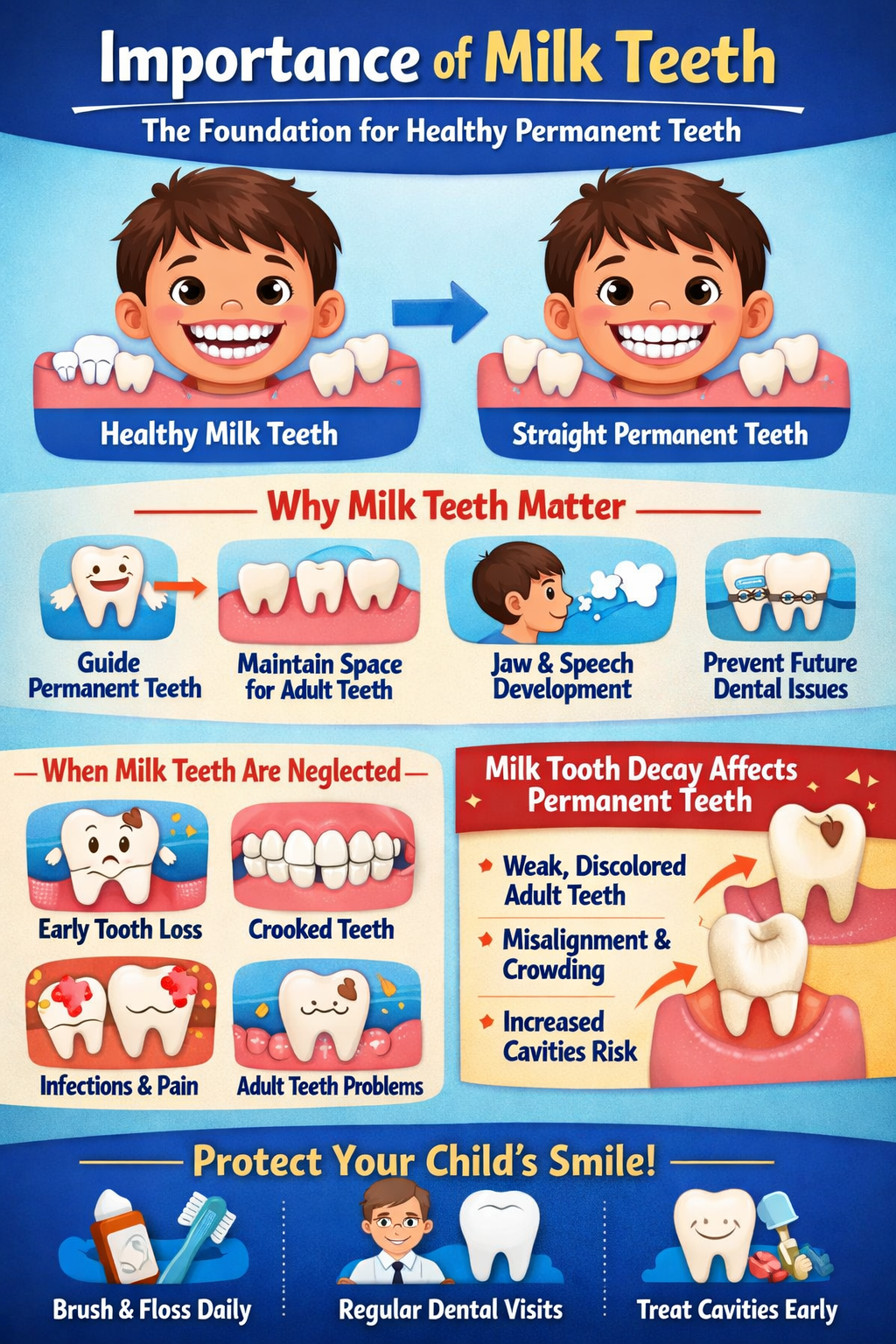
Milk teeth are not temporary placeholders. They are the basement (foundation) for permanent teeth and jaw development.
Key Functions of Milk Teeth
- ✔ Guide permanent teeth into proper position
- ✔ Maintain spacing for adult teeth
- ✔ Support jaw and facial development
- ✔ Enable proper chewing and digestion
- ✔ Help in clear speech development
- ✔ Build self-confidence through a healthy smile
Important:
Without healthy milk teeth, the permanent teeth may erupt in incorrect positions, leading to orthodontic problems.
How Milk Teeth Affect Permanent Tooth Alignment
Milk teeth act as natural space maintainers. When a baby tooth is lost too early due to decay or trauma, the neighboring teeth drift into that space. This results in:
- Crooked permanent teeth
- Crowding and overlapping
- Bite problems (malocclusion)
- Need for braces or aligners later
👉 Healthy milk teeth ensure perfect alignment of permanent teeth.
What Happens When Milk Teeth Are Neglected?
Neglecting milk teeth can cause serious dental defects and lifelong problems.
Common Problems from Neglected Milk Teeth
- ❌ Early tooth loss
- ❌ Severe cavities (early childhood caries)
- ❌ Gum infections
- ❌ Jaw growth disturbances
- ❌ Speech issues
- ❌ Pain and difficulty eating
- ❌ Poor self-esteem
Warning:
Infections in milk teeth can even spread to the developing permanent teeth beneath them.
Can Milk Tooth Decay Affect Permanent Teeth?
Yes. Decay in milk teeth can damage the permanent tooth bud forming underneath, causing:
- Discolored adult teeth
- Weak enamel
- Deformed permanent teeth
- Increased risk of cavities in adult teeth
Key Takeaway:
This is why early dental care for milk teeth is essential.
When Should Milk Teeth Be Treated?
Milk teeth should be treated with the same seriousness as permanent teeth.
Dental Care Tips for Milk Teeth
- 🦷 Start brushing as soon as the first tooth erupts
- 🦷 Use fluoride toothpaste (age-appropriate)
- 🦷 Avoid sugary snacks and drinks
- 🦷 Never ignore cavities in baby teeth
- 🦷 Visit a pediatric dentist every 6 months
- 🦷 Apply dental sealants and fluoride treatments
Why Parents Should Not Ignore Milk Teeth
Many parents believe milk teeth do not require treatment because they will fall out anyway. This is a dangerous myth.
👉 Healthy milk teeth = Healthy permanent teeth
👉 Neglected milk teeth = Long-term dental defects
Early prevention saves children from painful procedures and expensive orthodontic treatments in the future.
Frequently Asked Questions
Are milk teeth important for permanent teeth?
A: Yes, milk teeth guide permanent teeth into their correct positions and maintain proper spacing for alignment.
What happens if milk teeth fall out too early?
A: Early loss can cause misalignment, crowding, and bite problems in permanent teeth.
Can cavities in milk teeth damage adult teeth?
A: Yes, untreated decay can affect the developing permanent teeth beneath them.
When should a child visit a dentist for the first time?
A: By the age of 1 year or when the first tooth appears.
Final Thoughts
Milk teeth are the foundation for a healthy and perfectly aligned permanent dentition. Neglecting them may result in serious dental defects, misalignment, infections, and lifelong oral health problems.
By giving proper care to milk teeth, you ensure your child grows up with a healthy smile, strong teeth, and confident personality.
Give Your Child the Best Start
Schedule a pediatric dental consultation at Dr. Dev's Dental Hospital. Our expert team will ensure your child's milk teeth and permanent teeth develop healthy and strong.
Book Your Child's Appointment